Shvonder
The Heart of a DogShvonder is the chairman of the Kalabukhov House Management Committee and a political ally of Poligraph Poligraphovich Sharikov. He helps secure Sharikov’s recognition through official names, papers, housing claims, and a job, but that administrative alliance ultimately turns against the household and ends in an official record of Sharikov’s return to dog form.
Identity and First Appearance
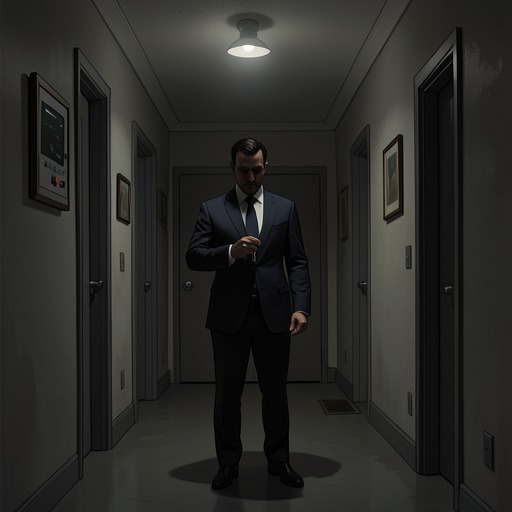
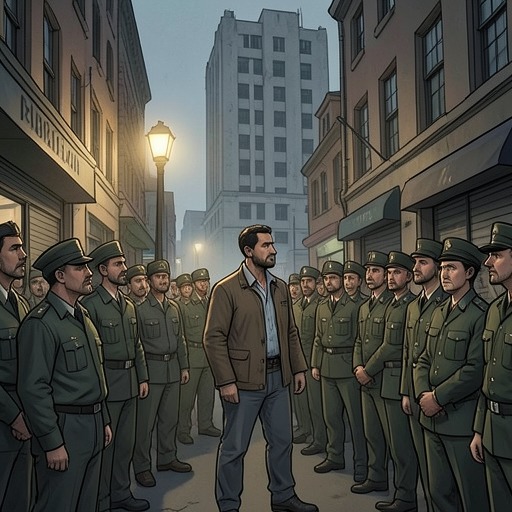
Shvonder first enters the story as the spokesman for the house management. He visits Professor Preobrazhensky after a general meeting of the building’s tenants, explaining that the committee has been charged with increasing the house’s occupancy. The visit brings the committee’s collective demand into direct conflict with the professor’s household and its existing arrangements.
Shvonder speaks in the name of tenants and administrative bodies, rather than as a private petitioner. His role gives him access to the practical instruments of recognition: registration, certificates, membership, and employment. The evidence presents him chiefly through these interventions and his dealings with the professor’s household.
Naming and Administrative Recognition
When Sharikov seeks registration in Moscow and an identity card, Shvonder’s political support gives that demand a practical route. The professor objects that Sharikov is an unnatural phenomenon and cannot be entered into ordinary records, but Sharikov insists that he needs documents so he will not be arrested as a deserter. The exchange exposes the mismatch between Sharikov’s demand to be recognized as a citizen and the professor’s insistence that he is an unprecedented result of an experiment.
Shvonder also participates in establishing Sharikov’s formal name. When asked what he will call himself, Sharikov answers, “Toligraph Poligraphovich.” Later, when the professor asks what surname he will take, Sharikov says he will use his real name. Shvonder proposes a certificate identifying its bearer as Poligraph Poligraphovich Sharikov and giving his birthplace as the flat. The professor rejects the formulation as absurd, but the proposed document shows how committee procedure attempts to translate an extraordinary origin into ordinary civil paperwork.
Housing and Employment
The committee’s recognition soon becomes a claim to material entitlement. Sharikov presents three pieces of paper, in green, yellow, and white, and says that he is now a member of the residential association. On that basis, he demands thirty-seven square feet from the professor, whom he identifies as the tenant in charge of Flat No. 5. He adds “please,” a small mark of newly acquired courtesy amid the confrontational force of the demand.
Shvonder’s influence also extends beyond the house committee. Sharikov later announces that he has obtained a job, and the appointment paper names him as a sub-department controller in the Moscow Cleansing Department, responsible for eliminating vagrant quadrupeds, including cats. The professor guesses who arranged the appointment, and Sharikov confirms that Shvonder did. The sequence links committee sponsorship to a broader official position: the person whose identity had been disputed is now empowered by an institution to act on animals.
Alliance and Accusation
The political connection becomes more dangerous when Sharikov submits a written denunciation against the household. The document accuses the professor, Doctor Bormenthal, Zinaida Bunina, and Darya Ivanova of threatening Shvonder, making counter-revolutionary speeches, and other political offenses. It is signed by Sharikov in his capacity as a cleansing-department controller and countersigned by Shvonder as chairman of the house committee. The signatures make their alliance visible as more than personal encouragement: Shvonder attaches the authority of his office to Sharikov’s allegations.
The accusation also reverses the direction of their earlier cooperation. Shvonder had helped Sharikov obtain an official identity and position; now that recognized position is used to make accusations against the people in whose flat Sharikov lives. The paperwork that first promised access and entitlement becomes an instrument of pressure against the household.
Reversion and the Final Report
When officials arrive with a charge naming the professor, Bormenthal, Zinaida Bunina, and Darya Ivanova in connection with the alleged murder of Poligraph Poligraphovich Sharikov, the professor answers that the man is his dog, the one he operated on. He explains that the attempt to turn an animal into a person failed and that Sharikov began reverting to his primitive state. Sharikov then barks from his chair, making the explanation immediately concrete.
The man in black collapses, and the room breaks into commotion. Bormenthal threatens to throw Shvonder downstairs if he appears in the professor’s flat again; Shvonder’s response is procedural: “Please enter that remark in the report.” Even at the moment when the supposed human subject of the official accusation is visibly a dog, Shvonder insists on preserving the incident as a record. His final appearance crystallizes his role in the story: he treats names, claims, threats, and even an astonishing physical reversal as matters to be entered into administrative documentation.